Helene Lofthus
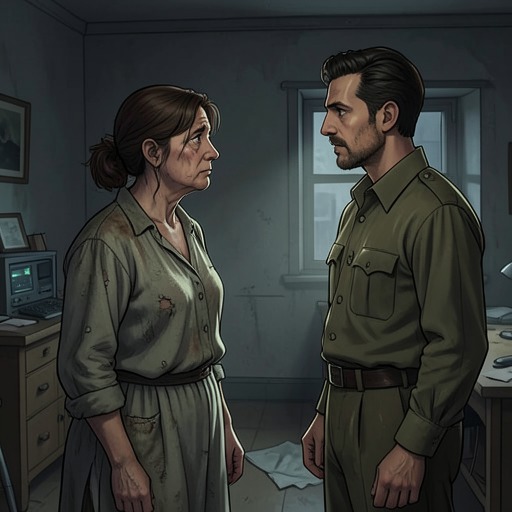
The SonHelene Lofthus is Sonny Lofthus’s mother and Ab Lofthus’s wife, but her significance reaches beyond the family whose loss defines Sonny’s early life. She is also the woman Simon Kefas loved, and the remembered triangle among Helene, Ab, and Simon helps explain both the dissolution of their friendship and Simon’s subsequent gambling. Her later suicide, and the diary Ab left behind, connect private grief to the circumstances that shaped Sonny’s childhood.
Identity and Background
Helene shared a modest Oslo flat with three young men studying at the Police College: Ab Lofthus, Simon Kefas, and Pontius Parr. The three friends called themselves the troika. Helene had found the spare room through a newspaper advertisement, and Simon later recalled that all three men fell in love with her soon after meeting her. Their courtship was unspoken and competitive; Simon remembered them as circling one another while each hoped to be chosen.
Simon described Helene as someone who rose before dawn to eat breakfast before leaving for work. Sometimes he got up early simply to see her there, tired before the day began, and remembered her eyes with particular affection. In the later conversation in which he told Sonny about their shared past, he said that Sonny had Helene’s eyes. This resemblance gave Sonny a personal connection to a mother he had lost, while Simon’s recollection revealed that his knowledge of her came from years of intimacy and regret.
Marriage, Family, and Financial Strain
Helene chose Simon first, but later left him and began seeing Ab. Simon told Sonny that the separation nearly overwhelmed him, especially when Helene soon became pregnant. She and Ab moved out of the shared flat and bought a house in Berg while Ab was still at the Police College. The young couple had little money; Simon linked their ability to buy the house to the low interest rates and readily available bank credit of the time.
Ab’s diary preserves the family’s circumstances in shorter, more private entries. He recorded the breakup of the troika and noted that Helene was pregnant a week later, followed by the purchase of their own house. He also wrote about trying to manage on a police officer’s salary, their parents’ inability to help because they too had limited means, and the pressure of rising mortgage interest rates. As the possibility of losing the house approached, Ab wrote that he had to find a solution and had promised Helene everything would be all right. The diary adds that Sonny seemed not to notice his parents’ worry.
The diary also presents Helene through Ab’s account of their son’s ambitions. On 19 March, Ab wrote that Sonny wanted to follow in his footsteps and become a police officer. Helene thought Sonny was obsessed with and worshipped his father; Ab considered a son’s admiration natural, adding that he too had been like that. He called Sonny a good boy, perhaps too good for a hard world, and a blessing to his father. The entry records a household defined both by parental affection and by financial anxiety.
Simon’s Loss and Its Consequences
After Helene chose Ab, Simon found it difficult to bear the happiness of his former friend and drifted away from him. The troika fractured: Ab and Pontius became close, while Simon stayed at a distance. When Ab asked Simon to be Sonny’s godfather, Simon declined with an excuse, though he secretly attended the christening from the back of the church. He remembered Sonny as the only baby there who did not cry, calmly smiling at the vicar. Simon then placed 13,000 kroner on a horse named Sonny.
Simon said that he had already accumulated debts when he began betting seriously on horse races. He described gambling as a way of standing at the edge of an abyss, detached from whether the outcome would be victory or catastrophe. In his later reflection with Else, he acknowledged that gambling and debts eventually drew her into the consequences: he had mortgaged their house behind her back and lost. Else forgave him, and he said that her forgiveness helped him stop gambling. This later change does not erase the earlier role of Helene’s departure in his personal history, but it shows how Simon’s losses became part of a longer pattern of damage, remorse, and attempted self-reform.
Death and Sonny’s Childhood
After Ab’s death by suicide, Helene fell apart, according to information Kari Adel had gathered from one of Sonny’s former teachers. The teacher’s account connected the deaths in Sonny’s family to his turn away from the future he had once imagined: he had wanted to become a police officer like his father, but after Ab died he got into trouble at school, pushed people away, deliberately isolated himself, and became self-destructive. Simon interrupted Kari to supply Helene’s name, then recalled that she had died from an overdose of sleeping pills.
The account gives Helene’s death a direct place in the story of Sonny’s early life without presenting it as the sole explanation for his later choices. Her death followed Ab’s suicide; Sonny’s school troubles and withdrawal followed the loss of his father and the collapse of his mother. Simon’s intervention also makes clear that Helene is not only a figure in the teacher’s report: he remembers her personally, and the name he supplies carries the weight of a past he has not left behind.
Narrative Significance
Helene is largely encountered through other people’s memories and records. Simon’s recollections bring forward the shared flat, the competition among the three friends, the end of his relationship with her, and the sight of Sonny at the christening. Ab’s diary supplies the household’s chronology: pregnancy, a new home, hopes for Sonny, and mounting pressure over the mortgage. Kari’s report then connects Helene’s death to the period in which Sonny’s life began to unravel.
Together, these accounts make Helene a point of connection among family history, male friendship, and the consequences of grief. Her decision to build a life with Ab changed Simon’s relationship with both of them; her son’s resemblance to her survives in Simon’s observation about his eyes; and her death forms part of the bereavement Sonny endured as a boy. Because Helene’s story is assembled from recollection and diary rather than narrated directly by her, the novel presents her through the lasting effects of her presence and absence.